
Why make small art?
I write about making small art (and specifically small books to make the small art in) a lot! Obsessed!
I mean seriously 🕰️ Scroll back through my post history 🗺️
Making art in general has been proven to slow time down.
Neurological research indicates that engaging with art can activate brain areas also involved in meditation and relaxation, supporting the idea that creative work can be a mindfulness pathway. — How creative arts support mental health in daily life
It can also be a practical mindfulness tool that still moves your practice forward. I love being able to start and finish something quickly, and working like this means that I can.
The frequent “mini wins” of finishing pieces does something else too, at least psychologically: it’s evidence that I’m still an artist, I’m still making, even in a hard season.
In this careening world that is running faster and faster, I try to create spaces that don’t.

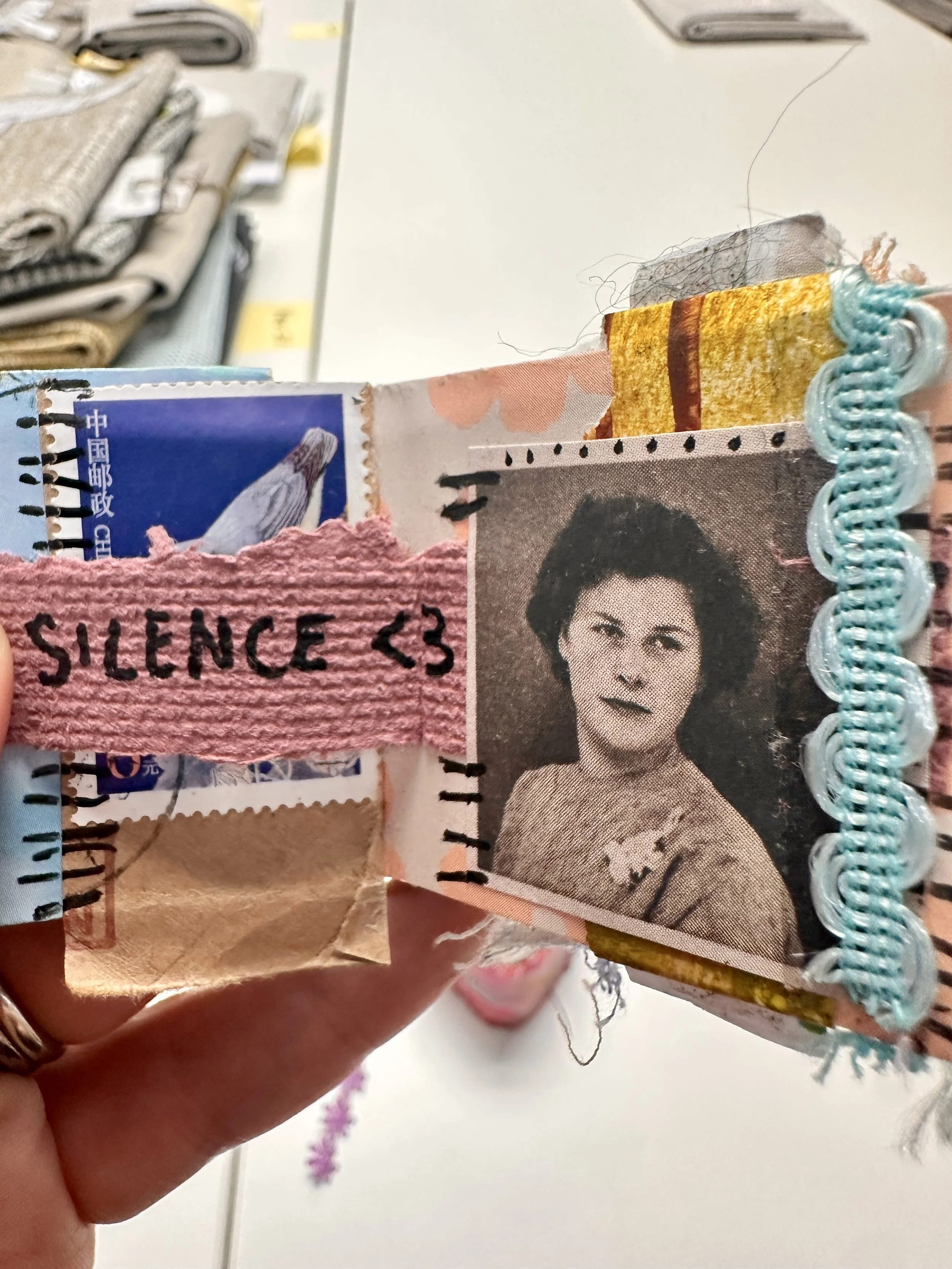
The act of creating small art = natural mindfulness:
Tiny details and repetitive actions
Small-scale art often involves repetitive actions that act like meditation for your heart rate. Personal favourites include drawing tiny patterns and small dots, or making repeated stitches.
Other people find making mandalas and zentangle drawings help ground them in the present through the repetitive details.
If the thought of integrating art therapy into your routine feels overwhelming, start small. Begin with simple exercises that don’t require a lot of time or materials, such as doodling for a few minutes or creating small Zentangle patterns. Small acts of creativity can have a significant impact on your stress levels and are easier to fit into a busy schedule. —- 5 Art Therapy Exercises for Stress Relief Christine Chae, LCSW
Repetitive, structured creative activities (e.g. pattern drawing, colouring, simple mark‑making) are associated with reduced anxiety and a sense of calm similar to relaxation or meditation exercises.
Small amounts of time: making memories
Since the materials are smol and the investment of time is short, there's less pressure to create anything good.
Hooray! Phew!
This reduces self-criticism and allows you / me / us / everyone / to surrender to the process rather than focusing on the product.
Pay attention to time to slow down the present. If you want to slow down time prospectively, as it unfolds, then pay attention to it. Savour it. Conversely, when you’re waiting and time is dragging, the worst thing you can do is watch the clock. — How to alter the passage of time to feel fast or slow
Emotional regulation and decompression
“I use drawing as a tool for finding freedom from the ways living with anxiety and depression tends to dehumanize me.
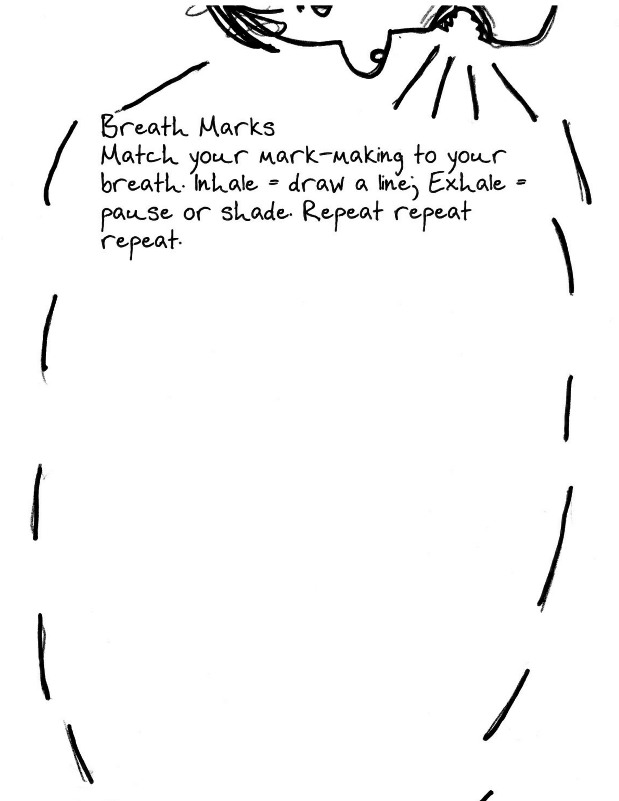
For me, drawing begins with breathing. Mindful breathing and drawing are about sustained awareness and presence. Connecting my breath to drawing is at the core of my creative practice. This practice led me to wonder if my approach could provide evidence for the value of drawing to maintain the mental well-being of others.” — Penn State theatre professor, William Doan.
Working with your hands is a powerful way to ground yourself in the physical reality and reduce mental noise.
A small surface encourages you to look closely and notice details; that kind of sustained looking is a classic mindfulness exercise that calms the nervous system.
Plus, when you focus on the process (colour, texture, cutting, gluing, mark‑making) rather than outcome, small art functions like a coping strategy to self‑regulate stress.
Slow down with Pause and Create: a ‘slow art’ starter kit workbook zine
Free workbook zine download. No fancy rituals needed; this is just a zine for grounding and slowing down. Print, read, create, breathe, rest.
Interested in reading more into art therapy?
I’m really fascinated by art as therapy so if you are too, keep reading: