
Letting the Page Lead: Returning to Old Pages with New Eyes
If you’re a writer, artist, or zine‑maker with piles of half‑finished pages, this is for you. This letter is about how to return to old work with new eyes, find the “crusty paint palette” of writing, and build a tiny weekly-ish ritual of coming back to your pages.
Contents:
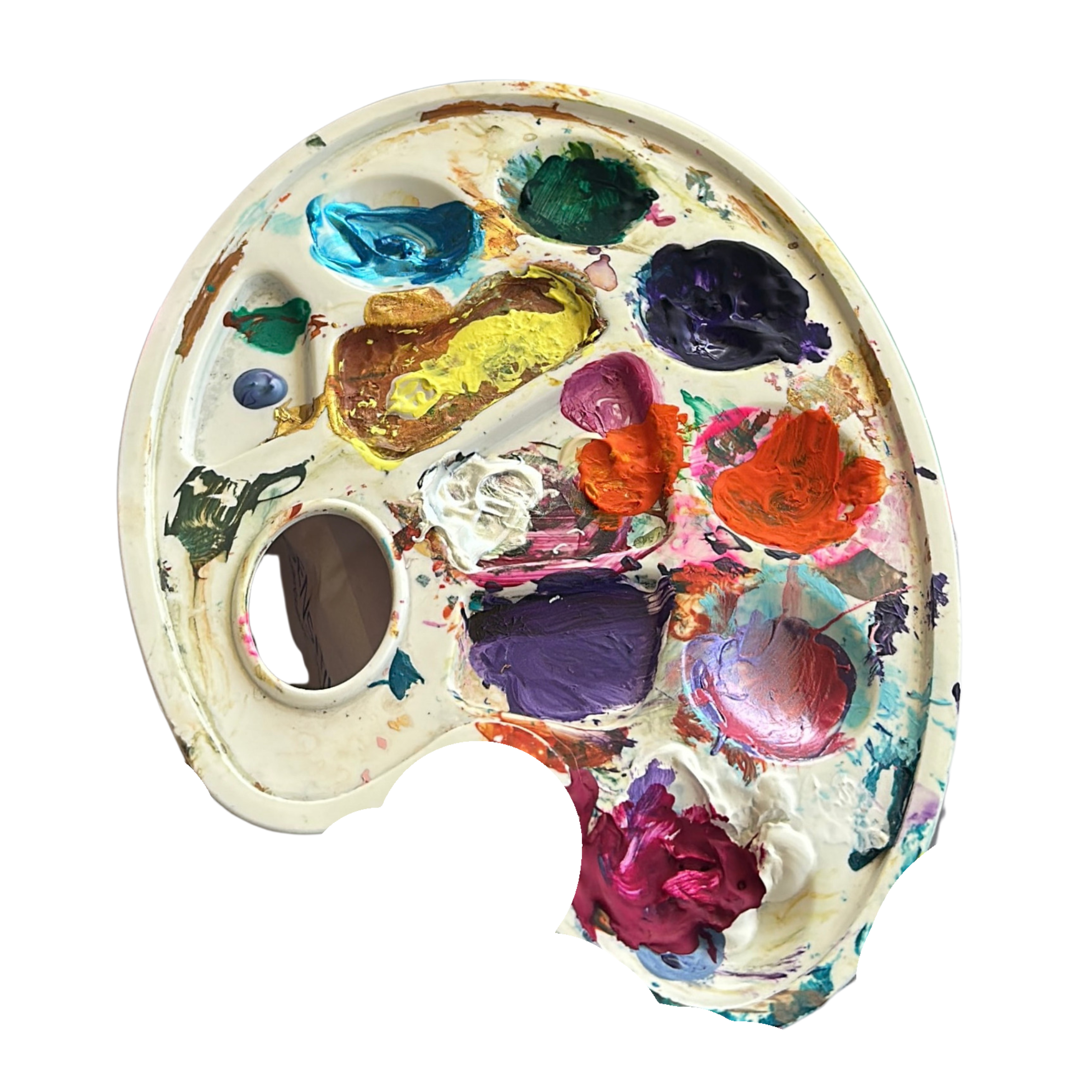
I Never Clean My Paint Palettes (And Writers Don’t Have To Tidy up Either)
The Page Changes When You Come Back
Sometimes Old Pages Contain Clues (to your subconscious)
Reader Prompts: How to Revisit an Old Page Today
How to build a weekly creative ritual
A tiny step‑by‑step ritual for revisiting old work:
One Last Note on Returning
“Why do you go away? So that you can come back. So that you can see the place you came from with new eyes and extra colors. And the people there see you differently, too. Coming back to where you started is not the same as never leaving.” ― Terry Pratchett, A Hat Full of Sky
I Never Clean My Paint Palettes
(And Writers Don’t Have To Tidy up Either)
Keeping old colours and marks visible (on a paint palette or a draft) gives you an instant place to start and reminds you what you loved last time.
This is why I never clean my paint palettes.
One because it looks cool, two because that hardened kaleidoscope of colours reminds me which ones I used the last time, what I loved, and what I didn’t. All in an instant!
It immediately gives me a place to start. If you can suggest the writer’s version of a crusty paint palette, I’m all ears.
For writers, a crusty paint palette might be: a single scruffy notebook where all your openings live, a recurring image you keep returning to, or a messy “starts only” document you never delete.
The Page Changes When You Come Back
Even when the page stays the same, you change, and that distance lets you see your work more clearly, as if it belongs to someone else.
The page might be the same, but the artist isn’t.
I for one get too close to what I’m working on, frequently. Can’t see the wood for the trees.
Stepping away and coming back is a simple way to notice what’s really working, what’s not, and what your tired brain couldn’t see the first time.
“Why do you go away? So that you can come back. So that you can see the place you came from with new eyes and extra colors. And the people there see you differently, too. Coming back to where you started is not the same as never leaving.” ― Terry Pratchett, A Hat Full of Sky
Sometimes Old Pages Contain Clues
(to your subconscious)
Revisiting old pages helps you see patterns you missed and shows you whether the piece needs more time to rise. By choosing one page that interests you and adding only one mark, line, or word, you’re reopening a conversation with the work without overwhelming yourself.
I remember submitting a novel manuscript to an Irish literary agent years and years ago, and the only way to get in touch with him was by phone.
So I sent it, waited and waited, heard nothing, and decided to call.
We chatted.
He said something I’ll always remember: a novel is like a cake. It needs time to rise.
Revisiting old pages is an excellent way to check if that particular cake is done yet or maybe needs to sit longer. It can show you:
Where it still sinks in the middle
Where it’s over‑baked
Where it’s surprisingly delicious already
Secondly, aside from cakes, older work has a curious way of revealing the things I’m interested in, before I knew I was interested.
Maybe I kept drawing arches.
Maybe my flash fiction pieces were preoccupied with water.
That kind of thing. It’s like I left myself a trail of breadcrumbs to follow back to what I’m trying to say.
Reader Prompts: How to Revisit an Old Page Today
One new layer is often enough to reopen the conversation.
Find a page that looks interesting (go with whatever it is you love in the moment)
Look at it.
Look at it some more.
Turn it upside down. Touch the paper.
Add one thing: lines work well for me, or a scribbled word in the margin
Keep going

An aesthethic mess :) don’t you love a messy art station :)
Thank you, come again! (how to build a return ritual)
Returning to your pages every so often like a lawless bandit creates a loose ritual that shows you what keeps appearing, what you avoid, and where your attention actually lives.
"Learning to draw is really a matter of learning to see—to see correctly—and that means a good deal more than merely looking with the eye." — Kimon Nicolaides
I’d suggest you do this every week but as we know, daily or weekly commitments are horrifying. Over time though, no matter how long that stretch of time is, the returning turns into a map of your / my subconscious attention.
You start to see what you can’t stop circling around.
Picked up anything off the street lately? Lay it down. What kept appearing in these pages? Was I very obviously trying to avoid an element of it? What do I love? Start with a colour (for me anyway).
How to build a weekly-ish creative ritual
These prompts walk you through choosing an old page, really looking at it, adding one small change, and noticing what that teaches you about your work.
A tiny step‑by‑step ritual for revisiting old work:
Choose one old page, draft, or artwork to revisit today. This is your experiment in how to return to old work without starting from scratch.
Look at it for three minutes.
Write down three things you notice now that you did not notice before. For example: marks that get repeated, or colours that come back or repeating adjectives. Or whatever helps you.
Add a new element: a sentence, colour, image, stitch, mark, or question.
Ask yourself: alright, will I stay here and start with this, or will I go and come back later?
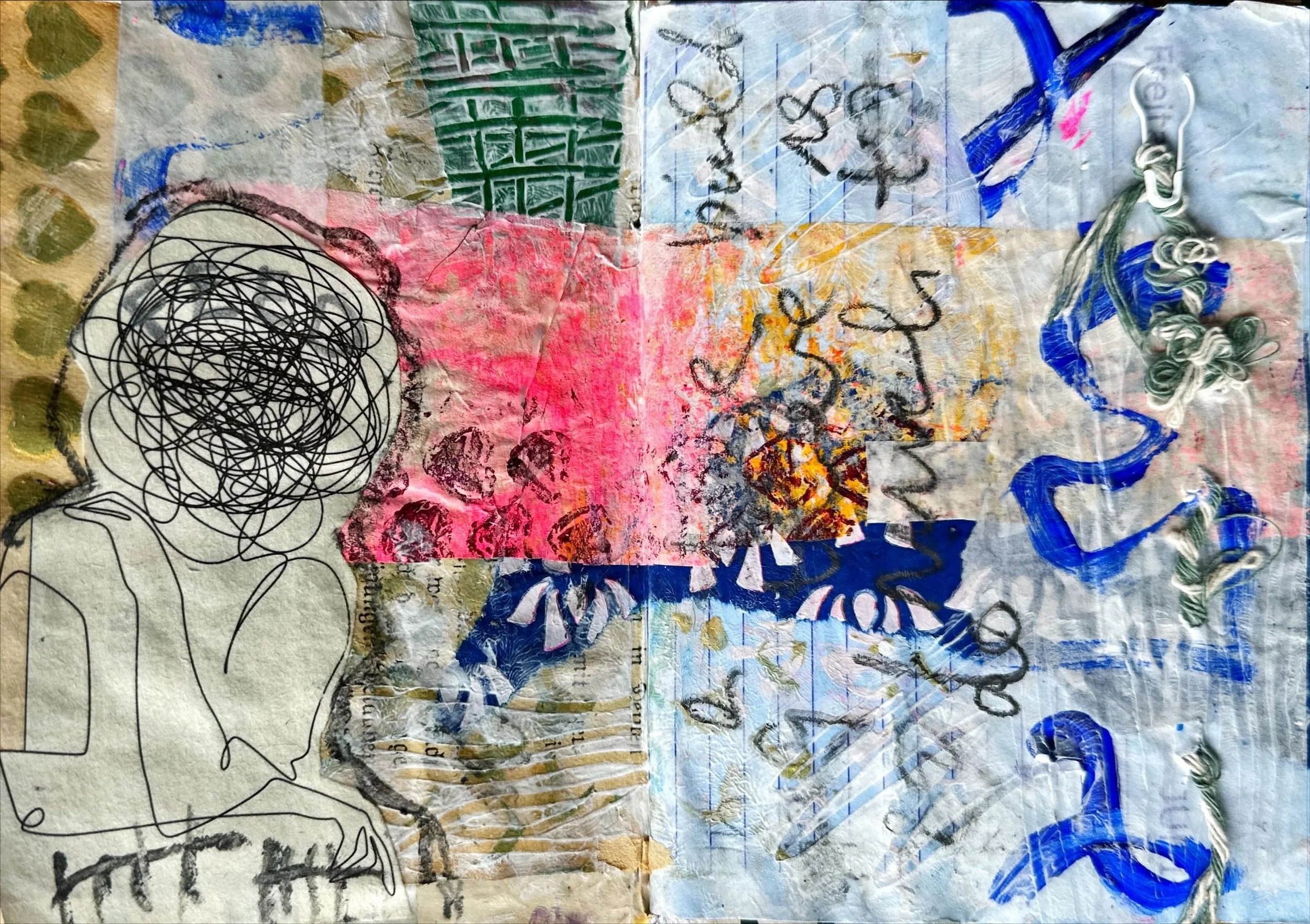
burn out state of mind: I worked on this double spread over a series of months, dropping it and coming back and adding elements
One Last Note on Returning
Returning to old pages, drafts, and paintings is part of the magic, not a failure to finish.
Each time you come back, you bring a slightly different version of yourself, new colours on your palette, and a few extra charms in your pocket. If you let the page lead and keep a loose ritual of returning, your work might just quietly reveal what you love, what you dodge, and what keeps humming under the surface. All you have to do is choose one old page, and begin.
Bee-Witched Zines is a slow, handmade arts project and weekly-ish email that blends zines, beekeeping, and reflective creative practice 🐦⬛ 🍂 🍄 🌙✨
Subscribe to Bee-Witched Zine Letters: